Why do kidnappers in Nigeria increasingly target schoolchildren?


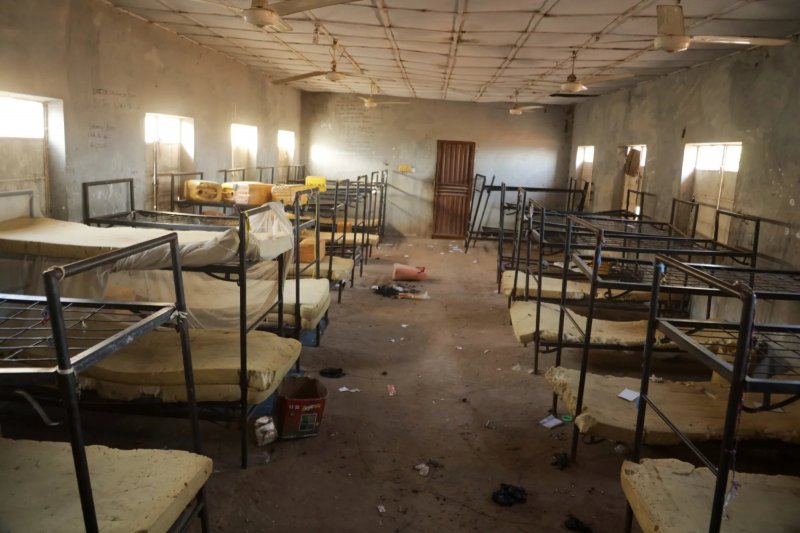
Nigeria has experienced a disturbing rise in mass kidnappings over the past decade, with schoolchildren becoming one of the most frequent targets.
Armed groups have repeatedly attacked schools, colleges, and universities, abducting hundreds of students at a time and demanding ransom payments from families, communities, or authorities, News.az reports.
While student kidnappings do not occur every day in every part of Nigeria, the phenomenon has become so common in some regions that many Nigerians view it as a recurring security crisis rather than an isolated event.
The issue has attracted international attention because of the scale of the abductions and the vulnerability of the victims, many of whom are children.
Why are students specifically targeted?
Students are viewed as attractive targets for several reasons.
First, schools often contain large numbers of potential victims gathered in one place, making mass kidnappings easier for armed groups.
Second, children generate significant public attention and emotional pressure. Governments and families face intense pressure to secure their release.
Third, kidnappers believe communities will mobilize resources more quickly when children are involved.
Finally, many schools in remote areas lack adequate security, making them easier targets than military facilities or heavily protected urban institutions.
When did the problem become internationally known?
The issue gained worldwide attention in 2014 when Boko Haram abducted more than 270 schoolgirls from the town of Chibok in northeastern Nigeria.
The incident sparked the global Bring Back Our Girls campaign and highlighted the vulnerability of schools in conflict zones.
Although some girls were eventually released, the attack demonstrated how educational institutions could become targets during broader security conflicts.
Is Boko Haram responsible for all student kidnappings?
No.
Many people automatically associate school kidnappings with Boko Haram, but the situation has become far more complex.
Today, a variety of armed groups operate across different regions of Nigeria. These include Islamist insurgents, criminal gangs, armed bandit networks, local militias, and organized kidnapping syndicates.
Many recent kidnappings have been financially motivated rather than ideologically driven.
For some groups, students represent a source of income through ransom payments rather than a political or religious target.
What are bandit groups?
Bandits are heavily armed criminal organizations that operate primarily in northwestern and north-central Nigeria.
Unlike traditional insurgent groups, many bandits are motivated mainly by profit.
Their activities include kidnapping, cattle rustling, village raids, armed robbery, and extortion.
Over time, these groups have developed sophisticated networks and often possess military grade weapons.
Kidnapping students has become one of their most lucrative activities.
Why has kidnapping become profitable?
Kidnapping has evolved into a major criminal enterprise.
Several factors contribute to its profitability, including high ransom payments, limited law enforcement capacity, difficult terrain, poverty, weak judicial systems, and large numbers of vulnerable targets.
Even when governments officially deny paying ransom, families, communities, religious organizations, or intermediaries often negotiate payments.
This creates incentives for further kidnappings.
Why can't Nigerian security forces stop the attacks?
The answer involves several overlapping challenges.
Nigeria is Africa's most populous country, with more than 230 million people spread across vast territories.
Security agencies face challenges including limited manpower, resource constraints, difficult geography, poor infrastructure, and multiple simultaneous security threats.
The country is simultaneously dealing with terrorism, separatist movements, communal violence, organized crime, and economic challenges.
As a result, security forces often struggle to protect every vulnerable school.
How does geography contribute to the problem?
Large parts of northern Nigeria consist of forests, mountains, and remote rural areas.
These environments provide ideal hideouts for kidnappers.
After abducting students, armed groups often move victims into forests where security forces face significant operational challenges.
Dense vegetation, limited roads, and inadequate surveillance capabilities make rescue missions difficult.
Some forest regions have effectively become strongholds for criminal groups.
Are schools themselves vulnerable?
Yes.
Many schools were built without security considerations.
Common vulnerabilities include no perimeter fencing, insufficient guards, remote locations, lack of surveillance systems, and poor emergency response plans.
Boarding schools are particularly vulnerable because large numbers of students remain on campus overnight.
Many attacks occur during late night hours when security is weakest.
Does poverty play a role?
Poverty is a major contributing factor.
Northern Nigeria contains some of the country's poorest regions.
High unemployment, limited educational opportunities, and economic hardship create conditions in which criminal recruitment becomes easier.
Young people facing few economic prospects may be drawn into armed groups that promise money, weapons, or social status.
While poverty alone does not cause kidnapping, it creates an environment in which criminal organizations can recruit members more easily.
How does unemployment affect the situation?
Unemployment and underemployment can increase vulnerability to criminal recruitment.
Many armed groups attract members by offering income opportunities unavailable through legal employment.
For some recruits, kidnapping operations appear financially rewarding compared with limited legitimate economic options.
The result is a steady supply of manpower for criminal organizations.
Is corruption part of the problem?
Many analysts argue that corruption contributes to Nigeria's security challenges.
Corruption can weaken institutions by reducing public trust, diverting resources, undermining law enforcement effectiveness, and delaying security reforms.
When communities perceive institutions as ineffective, cooperation with authorities may decline, making intelligence gathering more difficult.
Why do kidnappers often succeed?
Kidnappers frequently exploit surprise, speed, and local knowledge.
Many attacks follow a similar pattern.
Armed men arrive suddenly. Security personnel are overwhelmed. Students are gathered quickly. Victims are moved into remote areas. Negotiations begin.
The entire operation can occur within a short period, leaving little time for intervention.
Are all kidnapped students eventually released?
No.
While many students are eventually freed, outcomes vary significantly.
Some victims are rescued.
Others are released following negotiations.
Unfortunately, some remain missing for extended periods, while others suffer injury, trauma, or death.
The psychological impact often lasts long after physical release.
What happens to kidnapped students?
Conditions vary depending on the captors.
Victims may face long marches through forests, food shortages, disease, physical abuse, psychological trauma, and separation from family members.
Even after release, many survivors require extensive emotional and psychological support.
How does this affect education?
The educational consequences are severe.
Many schools have temporarily closed following attacks.
Parents sometimes withdraw children from school because they fear further kidnappings.
This contributes to increased dropout rates, lower attendance, educational disruption, reduced opportunities for girls, and long term developmental challenges.
The fear generated by kidnappings can damage educational progress across entire regions.
Are girls more vulnerable than boys?
Both boys and girls have been targeted.
However, girls may face additional risks, including forced marriage, sexual violence, and long term social stigma.
The Chibok abductions highlighted the specific vulnerabilities faced by female students in conflict environments.
At the same time, numerous mass kidnappings involving boys have also occurred.
What psychological impact do kidnappings have?
The trauma can be profound.
Survivors frequently report anxiety, depression, nightmares, post traumatic stress, difficulty returning to school, and fear of future attacks.
Families and communities also experience significant emotional distress.
Entire towns may remain traumatized for years after a major kidnapping incident.
What has the Nigerian government done?
Authorities have implemented various measures, including military operations, rescue missions, intelligence gathering, school protection programs, security infrastructure improvements, and community engagement initiatives.
The government has also launched programs designed to strengthen school safety and improve coordination among security agencies.
However, implementation challenges remain.
What is the Safe Schools Initiative?
The Safe Schools Initiative is a program aimed at improving protection for students and educational institutions.
Its objectives include better security infrastructure, emergency preparedness, community involvement, student protection measures, and enhanced monitoring.
The initiative reflects recognition that educational institutions require specialized security approaches.
Can technology help reduce kidnappings?
Technology can assist but is not a complete solution.
Potential tools include surveillance cameras, drones, satellite monitoring, early warning systems, communication networks, and biometric systems.
Technology works best when combined with effective governance, intelligence operations, and community cooperation.
What role do local communities play?
Communities often provide critical intelligence.
Residents frequently know local terrain, suspicious activities, and emerging threats better than external security forces.
Community cooperation can help authorities identify risks before attacks occur.
However, fear of retaliation sometimes discourages information sharing.
Is the situation improving?
Progress has been uneven.
Security operations have disrupted some criminal networks and prevented certain attacks.
However, new kidnapping incidents continue to occur.
The threat remains serious in several regions, particularly where criminal groups maintain strong operational capabilities.
Many experts believe sustained improvement will require long term reforms addressing both security and socioeconomic factors.
What is the root cause of the problem?
There is no single cause.
Student kidnappings in Nigeria result from a combination of armed insurgencies, organized crime, poverty, weak governance, unemployment, geographic challenges, inadequate school security, and limited state presence in remote areas.
The crisis sits at the intersection of security, economics, governance, and education.
What is the long term solution?
Experts generally agree that a lasting solution requires more than military action alone.
Key components include stronger law enforcement, better intelligence capabilities, enhanced school security, economic development, job creation, educational investment, anti corruption measures, community engagement, and judicial reform.
Reducing student kidnappings ultimately depends on making kidnapping a high risk, low reward activity while simultaneously addressing the social and economic conditions that allow criminal networks to thrive.
The challenge is immense, but many analysts argue that protecting schools is one of the most important investments Nigeria can make in its future.
By Faig Mahmudov


Similar news